

A quick overview of what small businesses need to know about creating compliant food and beverage labels in Canada.
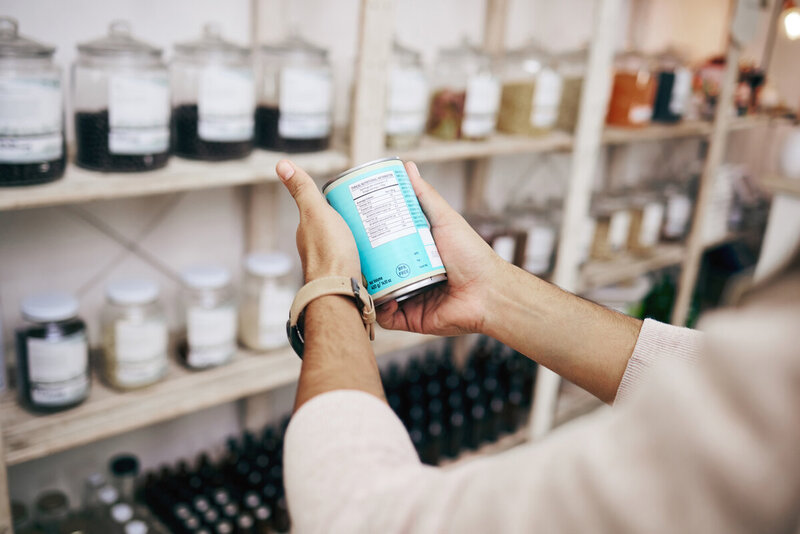
Designing new product labels can be one of the most satisfying aspects of developing and selling food and beverage products as a small business. However, beyond the excitement of branding, developing a product label in Canada also means adhering to some vital rules of label compliance. Whether your business is in the process of developing a new product or if you need to assess labels for products being imported into Canada, you need to be aware of these eight potential mistakes.
Missing French
In Canada, food and beverage labels must be English/French bilingual. Not just in Quebec. This is a mandatory labelling requirement nationwide, and it applies to more than just the product’s name. It is mandatory for things like ingredients, nutrition facts, and best before dates to be presented in both languages. The only exception to this rule is with regard to the company name and address. This information may be shown in either English or French.
Incorrectly Formatted Nutrition Facts
The mandatory Nutrition Facts information must be formatted in Health Canada’s standardized format. Any deviation from their specific guidelines may result in label noncompliance. In fact, showing the right nutrition data but in the incorrect format is one of the biggest mistakes Canadian food and beverage companies make.
A correct label format will comply in these five essential ways:
• The information is bilingual English/French
• Uses Canadian terminology
• Includes required ingredients
• Includes % Daily Values
• Uses the standardized nutrition facts header
KEEP IN MIND: US-style nutrition formatting is not compliant in Canada!
Undeclared Allergens
It is essential to declare priority allergens on food and beverage labels in Canada to avoid non-compliance and the potential for a product recall! In Canada, there are 12 priority allergens. If you products contain any of these items, it must be stated clearly on your label in both English and French.
These items include:
• Peanuts
• Tree Nuts
• Milk
• Eggs
• Sesame Seeds
• Soy
• Wheat and Triticale
• Mustard
• Fish
• Shellfish
• Sulphites (at10 ppm or more)
• Gluten Sources
Common Name Not in The Right Place
This is another of the biggest mistakes new food and beverage businesses tend to make when labelling their products. For most products, the name of your product is not its common name, unless you happen to be a certain Canadian grocer with telltale yellow and black packaging. Things like Morning Energy, Nature Fresh, and Prairie Harvest are marketing names, not common names. The common name must tell consumers what the product actually is. Examples might be whole grain cereal, apple juice beverage, or seaweed crackers.
In addition to including this information, it’s also important to include it in the right place. Regulations state that most prepackaged foods in Canada must show the product’s common name on the part of the package most likely to be seen by the consumer. In terms of labelling, that means the main label on the front of your bottle, box, pouch, or can.
Additional mistakes that can cause non-compliance for your food and beverage labels in Canada:
• Missing Net Quantity Declaration
• Tiny Text on Curved Bottles and Cans
• Unsupported Health Claims
• Failure to Assess Front-of-Package Requirements
Shop avery.ca for an extensive variety of labels, cards, printing services, and other essentials for your small business.


Please complete your information below to login.